We are undoubtedly living in a technological age. Electronics are increasingly appearing in places that were previously devoid of them. This forces constant pressure on manufacturers to do more, faster and, if that weren’t enough, the end product must be smaller, more efficient and, at the same time, considerably cheaper than competitors’ solutions. Is this even possible?
The answer is YES! Unfortunately, only under the assumption that we make optimization milestones at the product design and implementation stage. Since optimization issues are a river topic, we will focus only on solutions that improve the scope of quality control. So is there anything we can do to maintain the highest quality and at the same time not cause a significant increase in the price of the manufactured module?
The answer is also a definite YES! The most important elements that will significantly contribute to the achievement of this goal are machines that ensure the repeatability of the process. The machines are 2D and 3D AOIs, which have been known for years, as well as “X-ray” machines, which are still treated as a novelty. The drop in prices of the latter has triggered a wave of purchases in the Polish industry. As is often the case, the investments made in equipment are not always followed by the ability to use the acquisition.
In this article we will try to describe what new opportunities will open up through the use of X-RAY, but not to be too rosy either, we will outline what challenges await us on this occasion.
We undoubtedly live in a technological era. Electronics are increasingly appearing in places that were previously devoid of them. This forces constant pressure on manufacturers to do more, faster, and if that wasn’t enough, the final product must be smaller, more efficient and significantly better than the competition’s solutions. Is this even possible? The answer is YES! Unfortunately, only on the assumption that we make milestones in optimization at the stage of product design and implementation. Since issues related to optimization are a topic of discussion, we will focus only on solutions that improve the scope of quality control. Is there anything we can do to maintain the highest quality and at the same time not cause a significant increase in the price of the manufactured module?
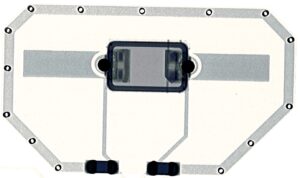
To begin with, we need to outline what this X-ray wave machine is in general. Each of us has probably been x-rayed at least once in our lives at the dentist, for example. We know that it takes a lot of time. We have to stay in non-exposed areas, shielded by a layer of lead. Such a device for use in electronics is built no differently. The role of insulator here is played by several hundred kilos of lead on the outer walls, and the radiation source is safely hidden between them. So, with judicious use, nothing bad should happen. If we already know how to do it safely then we can proceed with the slow and tedious work of operating the X-ray machine. Here again the analogy is to a doctor’s visit. While it takes a maximum of tens of seconds to take the picture itself, it takes long minutes to evaluate what is on it and describe it. A simple calculation shows that this will be the slowest part of the process. We have to expect to check only a few tens of percent of the total production. Unless, of course, we assume in advance a correspondingly larger number of hours to complete the project, so as to check all the pieces produced. It’s a matter of individually assessing the risk of possible defects during the continuation of the assembly and the stability of any processes and also the complexity of the components used. We can overexamine virtually everything on the PCB and it will be completely safe for the module undergoing expertise. We need to rethink the cost-effectiveness of checking components whose visible leads can be evaluated by faster inspection methods such as AOI and microscope. In our factory, we have adopted a methodology of checking the first ten units produced of each module with a BGA, CGA, etc. type component present. Subsequent inspection is done on every tenth module unless other arrangements are made. The customer receives such a service as a complimentary service to the assembly performed with us. In this way, both we and our customer can be sure that the manufactured device will work faultlessly throughout the warranty period.