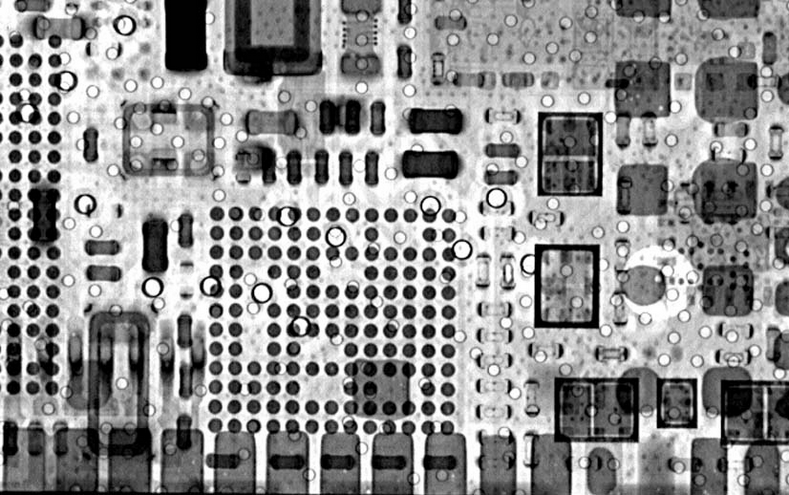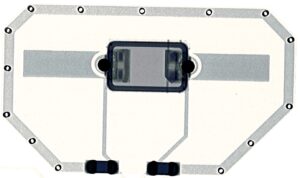
Since we often encounter incorrectly taken X-rays and sent to us as a reference, we decided that it is time to create a simple instruction on how such an X-ray should be performed. On the basis of several of them, we will suggest how to make a quality assessment according to IPC-A-610 standards. A very modern device supplied by Renex from Wloclawek is responsible for the quality of our services in this regard.
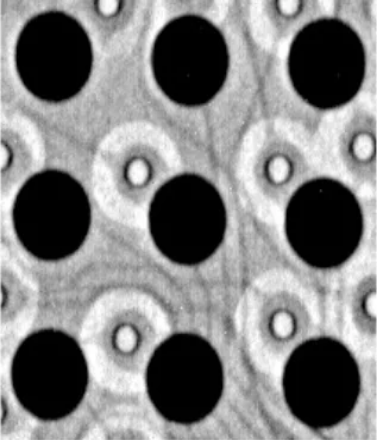
A fragment of the same layout overexposed in our company. Since the difference is visible even to the untrained observer, we will not focus on the differences between these photos, but in short subsections we will try to present what has begun to be visible.
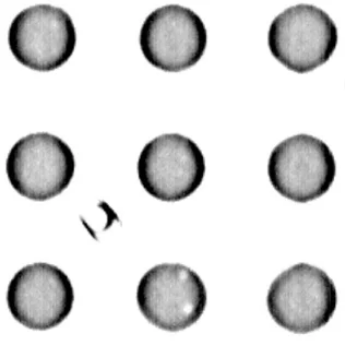
- The most important point is the shape of the solder joint. It must be regular. In this case, the most common solder round but can present any shape. Anomalies such as jagged edges, egg-shaped, are indicators of the process, suggesting that there was a problem of printing stability during the application of paste by screen printing, or the process in the reflow oven was not optimally long, so that the tin on the circuit did not permanently bond with the paste applied to the PCB. There may be additional distortions in the image such as white thin lines. This is an incredibly difficult phenomenon to grasp, and very often the assessment of such a condition depends only on the subjective assessment of the device operator and his experience.
- Another point is to assess whether there is a light center and a dark edge in the image of the formed joint. This is a direct result of the density of the formed joint, the weight of the layout and the construction of the pads. If there is one, then we have a great chance that the final product will “live”. Reverse coloring, unfortunately, will usually mean a defect, although contact by “contact” and any operation of such an arrangement is still possible.
- A keen eye, in the lower, middle point of the photo, will notice small anomalies that look like holes. This is an inherent part of the formed solder joint, occurring mainly in lead-free technology. Professionally they are called, solder gaps. IPC standards set their maximum size at 30% of the joint surface, with no loss in its quality. However, looking at this phenomenon through the prism of common sense, allowing larger gaps than 20% can contribute to future cracking due to the resulting stresses between the PCB and the circuit. The most common causes of damage, due to gaps in the solder, are vibration and frequent temperature changes. The resistance of such an “insecure” connection also increases, which is never good for the life of the module. In our company to maintain the highest quality of production, we make great efforts to ensure that this parameter does not exceed 15%. We achieve this by using the highest quality solder pastes, a properly refined screen printing process and profiling each new product on reflow ovens.
Micro transistor at high magnification. The visible graininess is the result of maximum magnification. Its actual size is 1.2 x 1.2 [mm]. Using an analogous grading method as in photo 2, we know that the correct connection was formed only on the pad located in the upper right corner. Such an arrangement will not work properly.
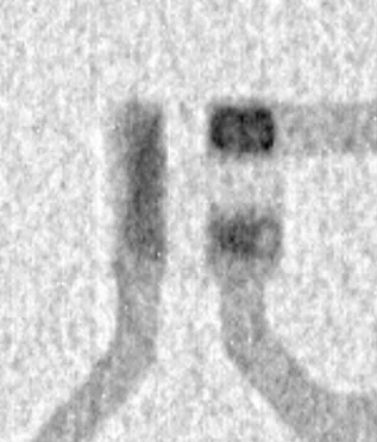
These are, of course, only some of the errors that can be located, but they are the ones that most often contribute to the non-functioning of the entire, assembled system.
For those who are most interested, in the form of checking the acquired knowledge, we add a photo with quite a few errors, on which we can look for “what went wrong” ourselves.