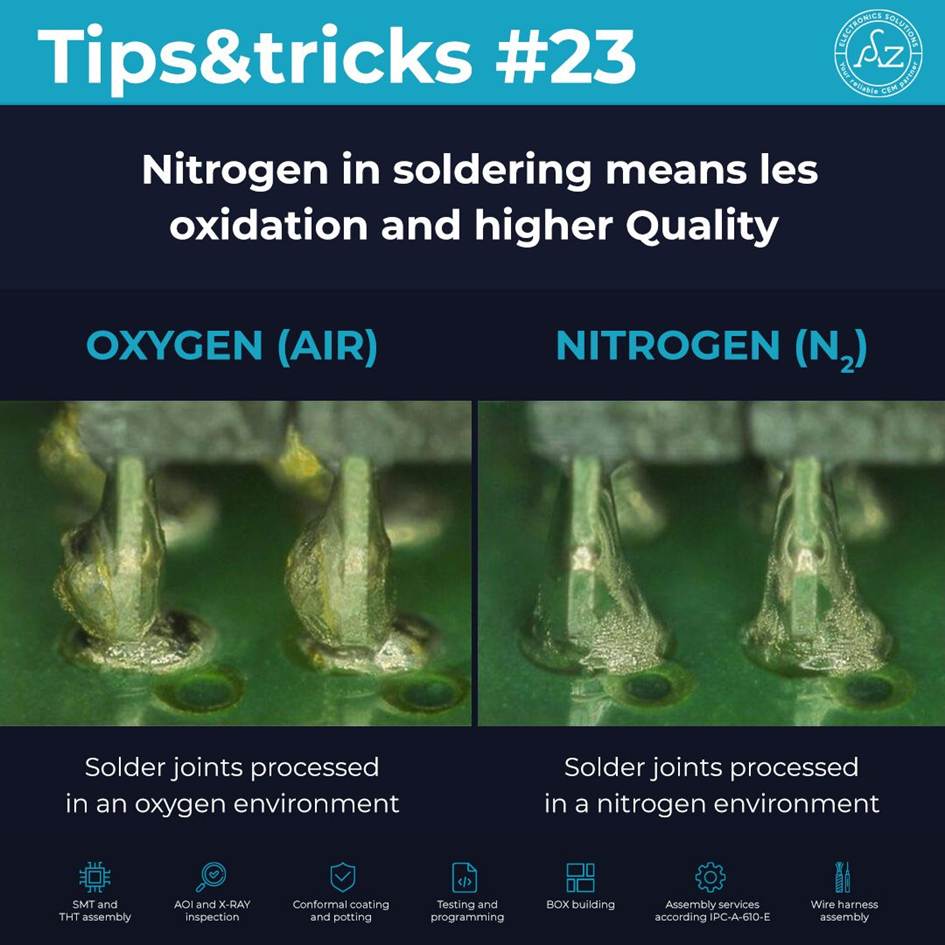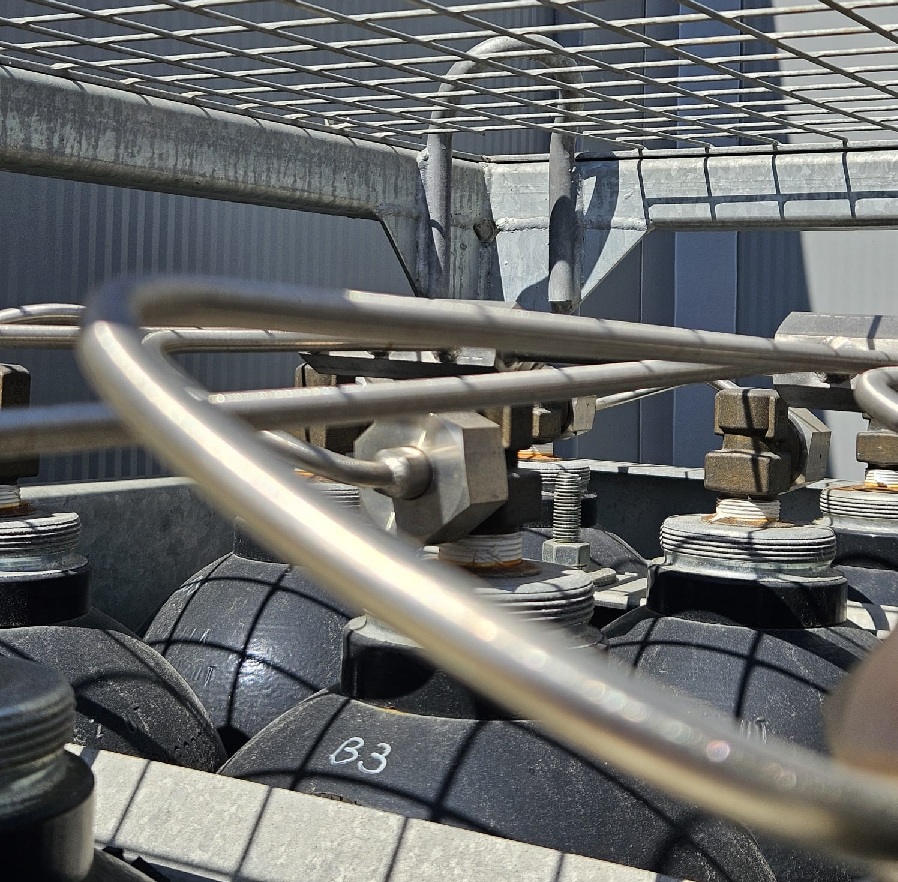
During soldering in a standard atmosphere, oxygen reacts with the surface of PCB pads, component leads and molten solder. This can result in poorer wettability, less uniform solder joints and a higher risk of process defects. Using a nitrogen atmosphere (N₂) in the reflow process reduces oxidation, which leads to:
• better solder wettability
• smoother and more uniform solder joints
• improved coverage of pads and component leads
• a more stable and repeatable soldering process
In practice, nitrogen is especially beneficial when assembling components that require a high-quality process, such as BGA, QFN, LGA and fine-pitch devices.
An additional advantage is the possibility of using less aggressive no-clean fluxes, which may reduce post-soldering residues and improve the cleanliness of the finished module.
However, it is important to remember that nitrogen does not solve design-related issues, such as non-optimised pad geometry, oversized thermal pads, vias that drain solder away, or incorrectly designed stencil apertures. These elements still need to be properly designed and matched to the production process.