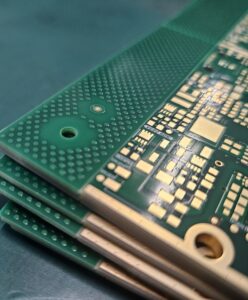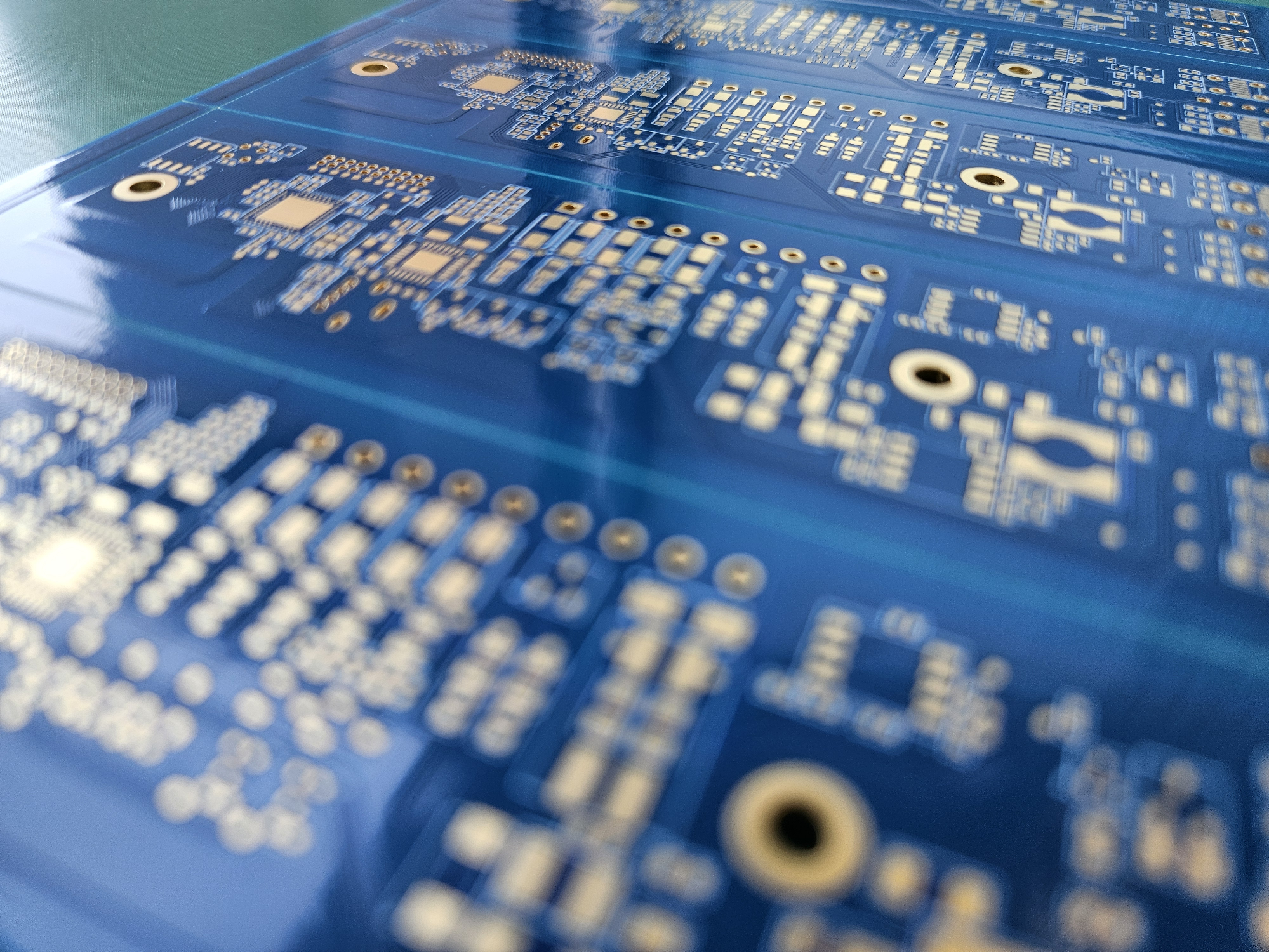
The selection of a PCB surface finish is very often made “by default” – without a deeper analysis of the application and project requirements. However, this decision affects not only the cost, but also the overall reliability of the device.
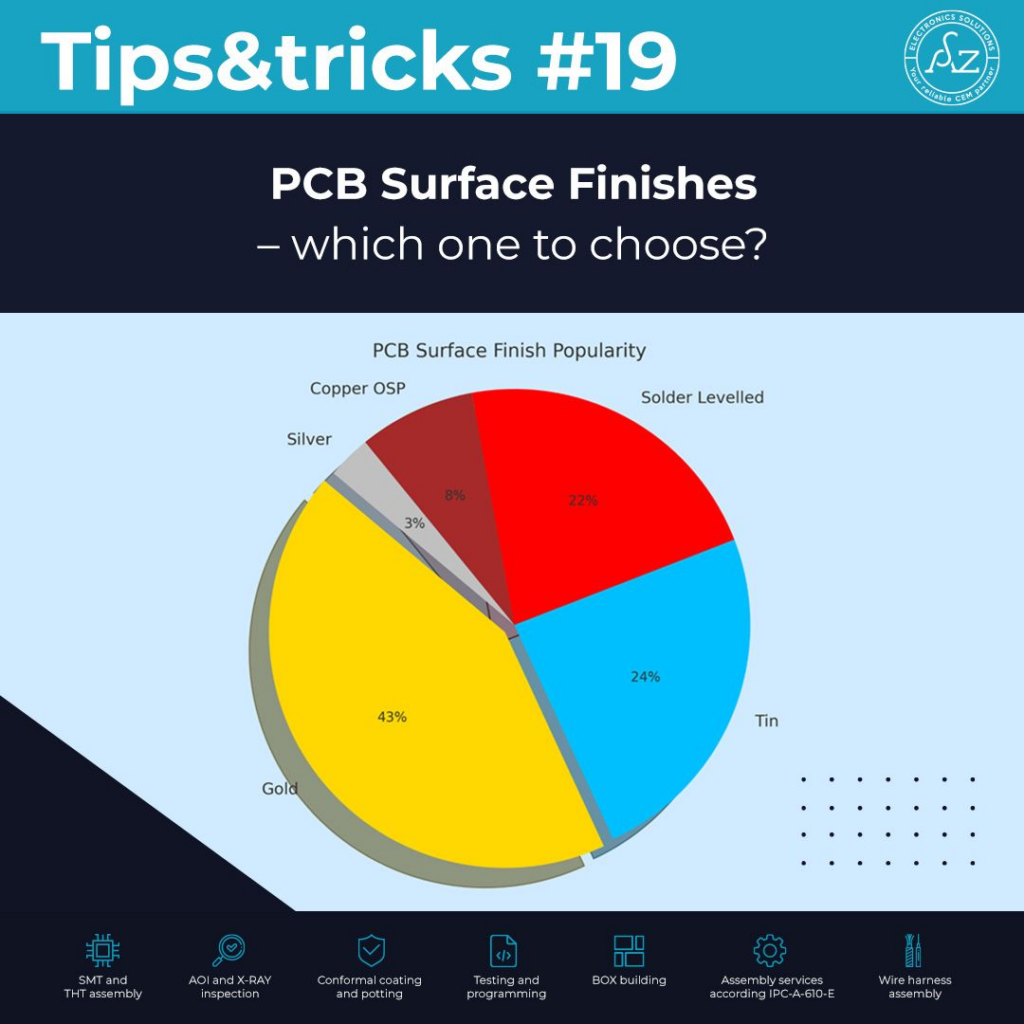
Market data clearly shows that the most commonly chosen finish is ENIG (approx. 43%).
But is it always the best choice?
In practice, every surface finish has its own advantages and limitations:
OSP – a low-cost solution, but sensitive to storage time and the THT assembly process
HASL – durable and easy to repair, but problematic for fine-pitch components
Immersion Silver (Ag) – very good for SMT processes, but delicate and not recommended for press-fit applications
Immersion Tin (Sn) – suitable for press-fit and relatively inexpensive, but requires attention due to the risk of tin whiskers
ENIG – stable and long-lasting, but more expensive and not ideal for RF applications
📌 Differences between Europe and China
Declared compliance with IPC-4552 is one thing, but in practice the thickness of nickel and gold layers can vary significantly.
Typical values are:
Ni > 2 µm
Au > 0.02 µm
These parameters have a direct impact on both the durability of the surface finish and the final PCB cost.